
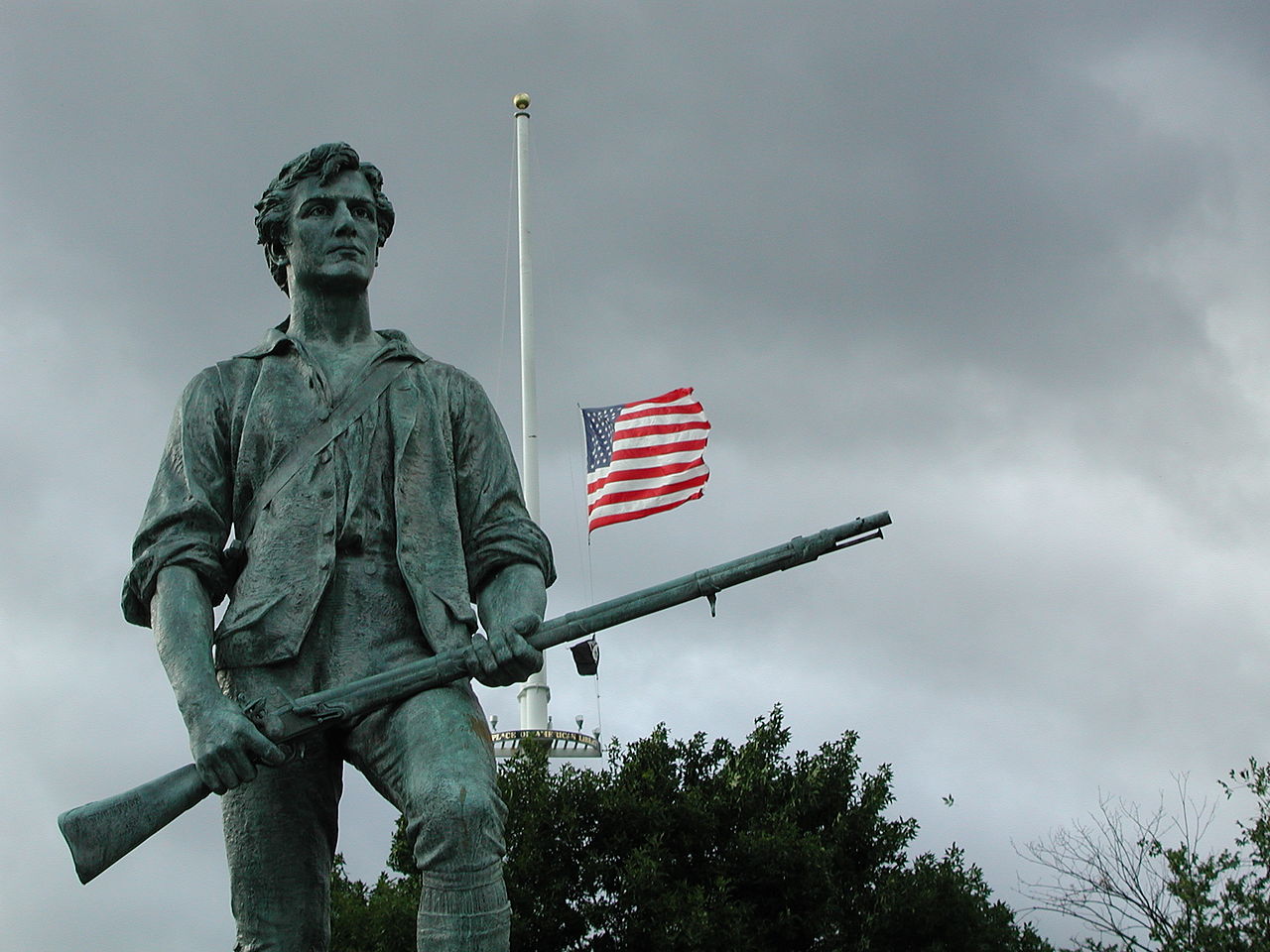

Amend(ed)ment II
A well regulated Militia, being necessary to the security of a free State, the right of the people to keep and bear Arms, shall not be infringed [unless you are a legal medical cannabis patient].
– Second Amend(ed)ment, US Constitution
It has been just over two years since The Leaf Online last reported on the issue of patients’ right to bear arms, specifically the Wilson case, which was just re-heard by the 9th District Appeals Court, after they dismissed it back in 2014. The 9th District, encompassing all of the West Coast as far east as Montana, is often referred to as the most liberal appellate court and only one of its nine states (Idaho) does not have some form of cannabis legalization on the books. While individual freedoms and rights are often held to be liberal ideals, such as the freedom to use medical cannabis, the freedom of speech, the right to an abortion, and so on, one freedom is anathema to core liberal values, and that is the right to bear arms. This may be a result of the word liberal being a double entendre in American politics, both referring to Liberalism as an ideology that embraces all individual freedoms (more commonly called Libertarianism these days) and referring to the Democratic party and those who share their values. Clearly, the 9th District court has proved by this ruling that they are liberal in the Democratic way, not the Libertarian way.
The Associated Press reports, “the 9th Circuit in its 3-0 decision agreed that it’s reasonable for federal regulators to assume a medical marijuana card holder is more likely to use the drug.” While this on its face is a laughably obvious statement, because of course legal users are more likely than non-users to consume a medication, the reasoning that this truism supports is utterly illogical and subversive to the future of effective medical care, for medical cannabis patients and non-patients alike. The 9th District court’s decision upheld the faulty logic used by the Bureau of Alcohol, Tobacco, and Firearms (ATF) in a memo issued five years ago on the same topic.
In 2011, the ATF issued a memo clarifying their stance on medical cannabis patients’ right to bear arms, which was that legal medical cannabis patients are actually illegal drug addicts, and must forfeit their 2nd Amendment rights. In order to buy a gun one must fill out ATF Form 4473, part of which is question 11e which asks if you are an unlawful user of drugs, or a drug addict. While the honest medical cannabis patient may be tempted to respond that ‘no, they are not unlawfully using their legal medicine, nor are they addicted to a substance found to be about as addicting as shopping,’ in fact the ATF would rather those honest patients lie and say they are unlawfully using what they have a legal right to use. Not only does this violate medical cannabis patient’s 5th Amendment rights against self-incrimination, as asserted by Wilson and her lawyers, it also supports a faulty definition of addiction.
The assumption originally made by the ATF, now upheld by the 9th District Court, is that if a person is seeking out a card to legally use cannabis they must be using it a lot, at least more than a non-user, which makes them, by definition, a drug addict. This makes the ATF unique among federal agencies in how they are choosing to define addiction. According to the Substance Abuse And Mental Health Services Administration (SAMHSA), “Substance use disorders occur when the recurrent use of alcohol and/or drugs causes clinically and functionally significant impairment [Emphasis added], such as health problems, disability, and failure to meet major responsibilities at work, school, or home.” For SAMHSA, it seems that functional impairment is crucial to their definition. Similarly, the National Institute on Drug Abuse (NIDA) states that, “Addiction occurs when a person cannot control the impulse to use drugs even when there are negative consequences—the defining characteristic of addiction [Emphasis added].” So, in NIDA’s view, if a person is in control of themselves and there are no negative consequences, then that person is not an addict. In the case of medical cannabis patients, where their legal use leads to, rather than impedes, their normal function their usage of cannabis cannot be said to be addiction under either NIDA’s or SAMHSA’s definitions.
The ATF is not an authority on medical research or addiction, it is not their job to “advance science on the causes and consequences of drug use and addiction,” that is NIDA’s mission. Nor is it the ATF’s prerogative to “reduce the impact of substance abuse and mental illness on America’s communities,” as that is SAMHSA’s responsibility. The ATF is “a law enforcement agency in the United States’ Department of Justice that protects our communities from violent criminals, criminal organizations, the illegal use and trafficking of firearms, the illegal use and storage of explosives, acts of arson and bombings, acts of terrorism, and the illegal diversion of alcohol and tobacco products.” As a law enforcement agency I am sure the ATF is familiar with the concept of jurisdiction, something they clearly lack when it comes to public health and substance use disorders.
Alex Kreit is a marijuana law expert at Thomas Jefferson School of Law and was rather optimistic about the ruling which he described as “significant,” stating “it seems like the court did not foreclose the possibility of a challenge by actual medical marijuana users that they shouldn’t be lumped with other drug users in terms of concerns about violence.” What he means by “actual medical marijuana users” is that, Wilson does not use cannabis, in fact, part of her argument for why she should still have her 2nd Amendment rights was because “she was not a marijuana user, but obtained the card in part as an expression of support for marijuana legalization.” That was perhaps a major reason why the court ruled she did not have standing, definitively, how can someone be a medical cannabis patient, and thus argue that they have rights as one, if they openly admit to never having used cannabis medically?
[…] government considers cannabis users as unlawful drug users, which is grounds to deny someone their 2ndAmendment rights, it is not advisable to have armed security guards with your shipments, otherwise […]
If you are one that believes the Supreme Court is the final arbiter of what
is lawful and constitutional, then you have believed a lie and a myth that
Jefferson warned about. The States still retain their rights to this day to defy
the federal judiciary, which has become an oligarcy. We just need strong
statesmen as governors and legislatures to make that stand!
In writing to William Jarvis, Jefferson said, “You seem . . .
to consider the judges as the ultimate arbiters of all constitutional questions;
a very dangerous doctrine indeed, and one which would place us under the
despotism of an oligarchy.”
The germ of dissolution of our federal government is
in the constitution of the federal Judiciary; an irresponsible body (for
impeachment is scarcely a scare-crow) working like gravity by night and by day,
gaining a little today and a little tomorrow, and advancing its noiseless step
like a thief, over the field of jurisdiction, until all shall be
usurped.”